
Vol. 1 No. 6 - 🧁 Risk of type 2 diabetes after colorectal cancer diagnosis
Brought to you by

Dear Thriver,
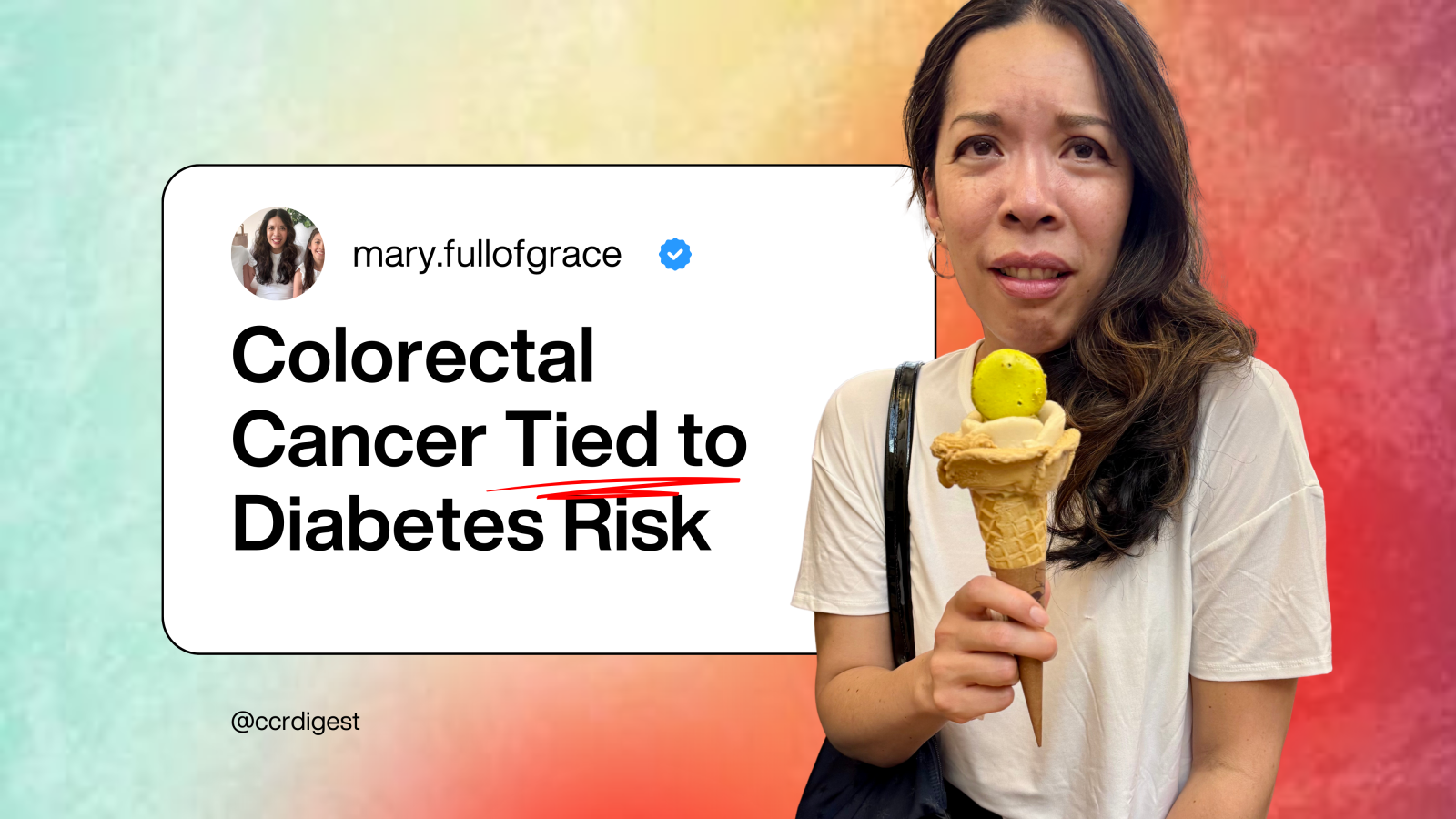
Dizziness. Nausea. Visceral Regret. That’s what two consecutive days of ice cream indulgence while on holiday brought me. I know better than this. It derailed my weekend and the Digest I originally planned to write.
Two years ago, I was diagnosed with prediabetes — meaning my blood sugar is higher than normal, but not yet in the type 2 diabetes range. Since then, I’ve been getting regular blood work every 6 months for fasting glucose and hemoglobin A1c — 2 key biomarkers used to screen for and monitor type 2 diabetes.
I already know my risk for type 2 diabetes is high — especially since I needed insulin for gestational diabetes during my last pregnancy. But after my recent sugar crash, I wondered, if my colorectal cancer diagnosis may also be a risk factor for type 2 diabetes?
What is well-known: The link between type 2 diabetes and colorectal cancer is well-documented. People with type 2 diabetes face a 20–40% higher risk of developing colorectal cancer. But what I am wondering about is the reverse: could having had colorectal cancer raise the risk of developing type 2 diabetes?
What I wanted to know: So, I thought: why not seek out the research, digest it, and share what I find with our community? There’s some truly encouraging work being done in the colorectal cancer space — and part of my goal with the Digest is to spotlight not just my own research, but the important contributions of others. I hope this edition helps bring that work into focus and offers insights that matter to all of us.
Here’s to staying curious, staying informed, and continuing the conversation — together.
With gratitude,




🍽️ The digest: New-onset diabetes after colorectal cancer, connecting the dots
Year published: 2022
Study by: An international team of researchers with corresponding contributors based at Harvard medical school.
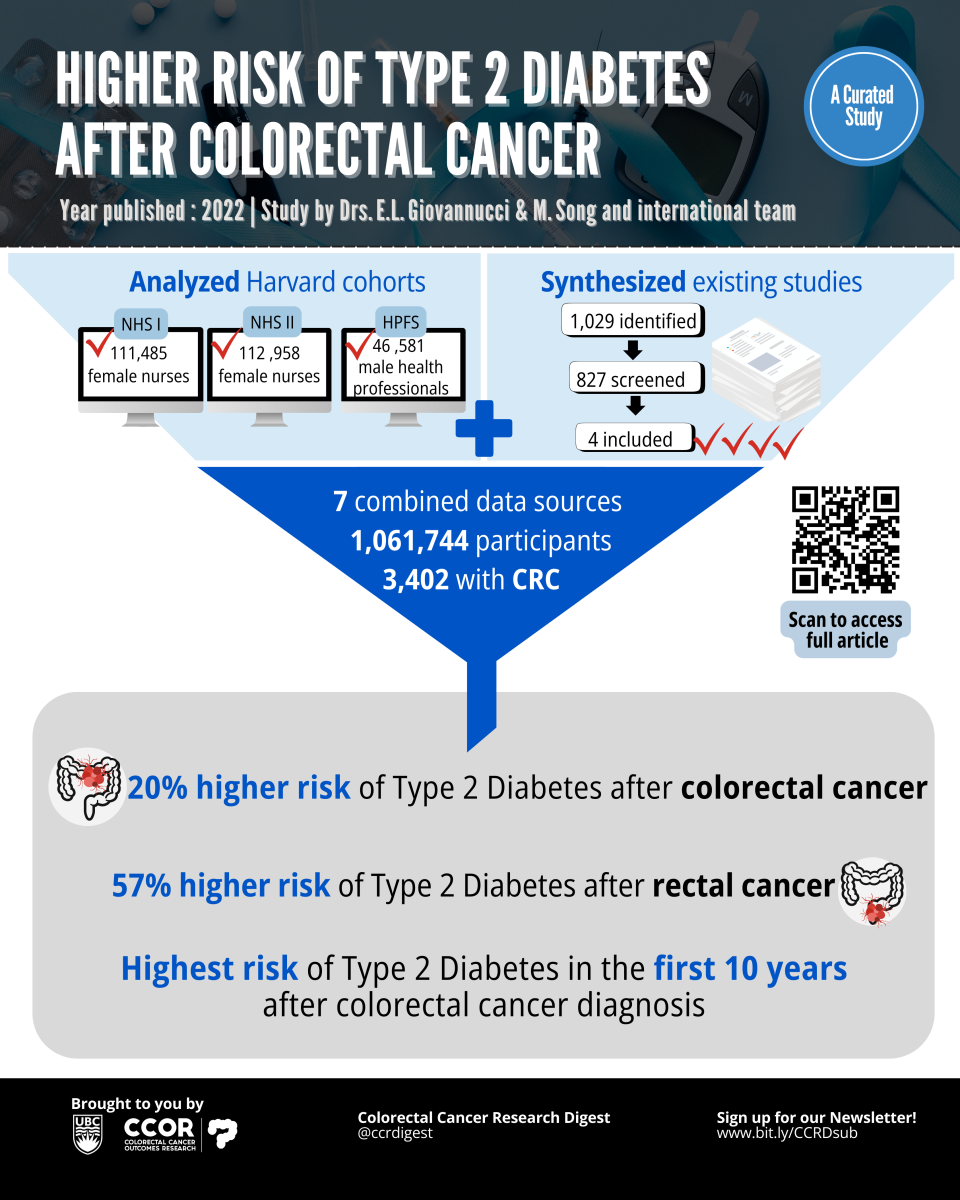
How this research was done: Researchers did three things. First, they looked at data from 3 long-running health studies led by Harvard — including thousands of nurses and other health professionals who’ve been followed for decades. Second, they looked at past research to see what other studies have found about a possible link between colorectal cancer and type 2 diabetes — and in the process, they identified 4 relevant studies. Third, they combined findings from all 7 studies to provide a clearer, more comprehensive view of the connection between colorectal cancer and risk of developing type 2 diabetes.
What they found: These are the findings that stood out to me:
People who have had colorectal cancer are about 20% more likely to develop type 2 diabetes than those who have not had colorectal cancer.
The risk is even higher for people who have had rectal cancer — they are about 57% more likely to develop type 2 diabetes than those who haven’t had rectal cancer.
After combining findings across 7 studies, the risk for type 2 diabetes is highest in the first 10 years after colorectal cancer diagnosis.
Why I found this study important: Overall, I appreciated the thoroughness of the study, especially the use of multiple analyses. This study answered the question I asked myself of whether my colorectal cancer diagnosis could also contribute to my risk for type 2 diabetes. It is important to note that we do not fully understand why people with colorectal cancer may be more likely to develop type 2 diabetes. Changes in gut bacteria, inflammation, and some treatments for colorectal cancer may all play a role.
What to take from this study: Knowing how colorectal cancer might affect my future risk of type 2 diabetes is an important part of the survivorship journey. For me, I will still treat myself to ice cream but may not two days in a row.

☑️ Living with prediabetes: What helps me stay on track
I've been living with prediabetes for two years now, and these are a few habits that help me stay on track. I find that some of these also help with me keeping things under control "down there".
I stopped adding sugar in my coffee.
I don’t drink sweetened beverages (juices, soft drinks).
I make sure each meal includes a balance of protein and carbohydrates to avoid blood sugar spikes.
I try to walk or move around after every meal. I am able to do this after lunch and dinner. Sometimes that’s just going up and down the stairs a few times or taking a couple of laps around the block. I started doing this when I had gestational diabetes and was checking my blood sugar with finger-prick tests. I could clearly see the difference in my numbers depending on whether I moved or stayed still after eating.
It might sound a bit extreme, but this is what works best for me when it comes to satisfying my sweet tooth — I treat myself to dessert every Sunday. That’s why, in our house, we call it ‘Sugar Sunday’.

🎁 Helpful resources for managing
An evidence-based type 2 diabetes prevention program developed by a colleague at UBC (available at participating YMCA’s in select cities in Canada)

That's it for today!
👋 Before you go, we'd love to know what you thought of today's newsletter to help us improve the Digest experience for you.
Hit reply to let us know. Was it too hard to follow? Too long, didn't read it all? Leave you with more questions? Let us know! We read every response.
Talk soon,
Mary, Alexander, and Joy — The Colorectal Cancer Research Digest editorial team
