
Vol. 1 No. 7 - 💪 Exercise as medicine: Reducing recurrence after chemo
Brought to you by

Dear Thriver,
Today, September 24th, is World Cancer Research Day. As a colorectal cancer patient turned colorectal cancer researcher, I want to pause and honor this day. It’s a reminder of why I created this community: to make research accessible — digestible — and to keep pushing for discoveries — my own and those of others — that improve life and hope for those living with colorectal cancer.
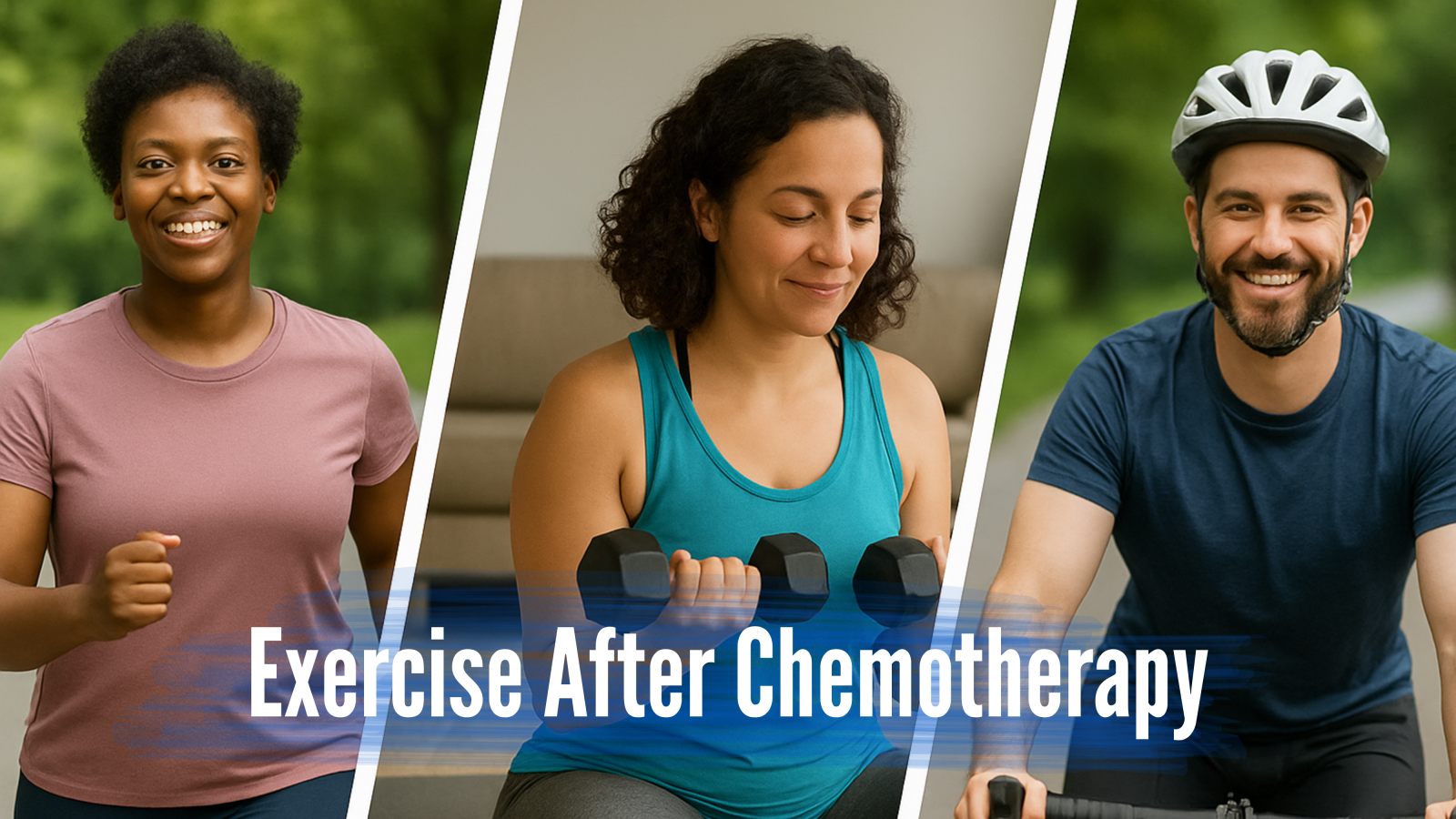
In the last edition of this Digest, I curated research on the link between colorectal cancer and risk of type 2 diabetes. This time, I want to highlight another important study — one that brings the highest level of evidence to something we’ve long been told about: exercise. What makes this study stand out is that it proves, with rigorous data, that exercise after chemotherapy can improve survival in colon cancer.
Personally, I’ve leaned on exercise as part of my own cancer recovery and survivorship. I really enjoyed writing this issue because it took me back to my Master’s work, when I was measuring exercise in older adults. With this study, it’s deeply encouraging to know the science has caught up to what so many have felt firsthand. That’s why I wanted to “digest” this study for you and share my insights.
With gratitude,




🍽️ The digest: All about the Colon Health and Lifelong Exercise Change (CHALLENGE) Trial
Year published: 2025
Study by: Led by researchers at the University of Alberta
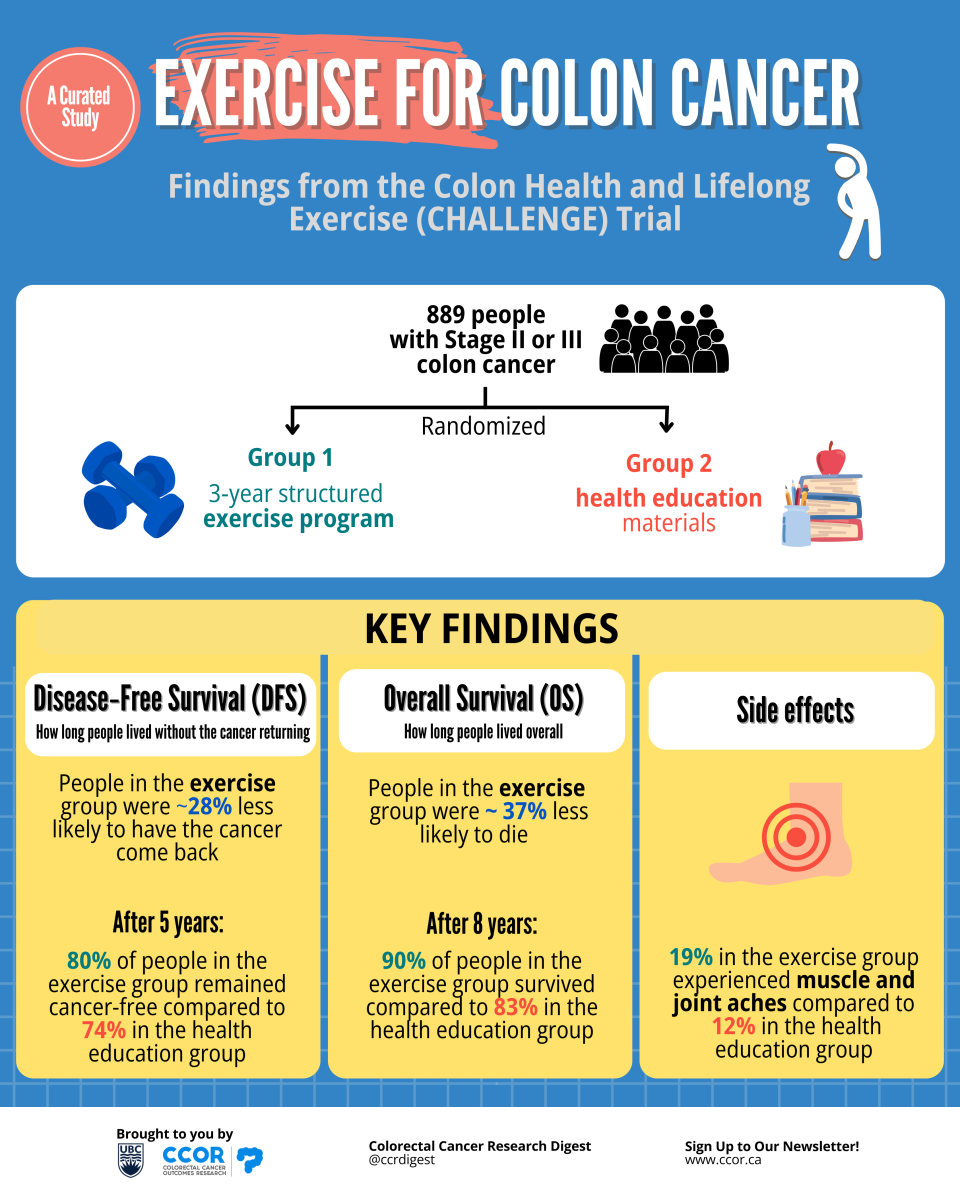
How this research was done: The CHALLENGE trial included 889 people with stage II or III colon cancer. All had completed chemotherapy and were doing less than 150 minutes of exercise per week — the amount usually recommended for good health. Participants were randomly assigned to one of two groups. One group took part in a 3-year structured exercise program with coaching and support, while the other received health education materials. Everyone was then followed for nearly 8 years to see whether exercise influenced disease-free survival (how long people lived without the cancer returning), overall survival (how long people lived overall), fitness and quality of life.
What they found: These are the findings that stood out to me:
People in the exercise program were about 28% less likely to have their cancer come back or to die during the study (disease-free survival). At 5 years, 80% of people in the exercise group were cancer-free compared to 74% in the health education group.
People in the exercise program were also about 37% less likely to die overall (overall survival). At 8 years, 90% of people in the exercise group were alive compared to 83% in the health education group.
People in the exercise group did have more muscle and joint aches: about 19% reported these side effects compared to 12% in the health education group.
Why I found this study important: What stands out to me about the CHALLENGE trial is how rigorous and well-designed it is. We’ve all heard that exercise is “good for you,” but this study takes it further — it provides hard numbers and long-term follow-up to show that exercise after chemotherapy can actually improve survival in colon cancer.
What to take from this study: What I find powerful about this study is that it transforms familiar advice — “get moving” — into level 1 evidence we can trust. For me, the takeaway is that exercise deserves to be seen as more than a lifestyle tip. It’s an important part of survivorship, something that can support recovery and long-term health — and now we have strong evidence to back that up.
🔎 A closer look: The exercise program behind the CHALLENGE trial
When I read about the numbers, my next question was: okay, but what exactly were people asked to do? Here’s the breakdown:
Add 10 MET-hours of exercise each week.
Build up over 6 months. The first 6 months focused on gradually reaching the goal — not hitting it all at once.
Keep it going. After that, the aim was to maintain or even increase activity for the rest of the 3-year program.
Choose activities. Walking, cycling, swimming — any aerobic activity at moderate intensity or higher counted.
Rely on support. Participants had regular coaching and check-ins to help them stay on track.
Stick with it long term. About 8 in 10 participants got started, and around 6 in 10 were still
🔢 Demystifying METs: What those numbers really mean
A key aspect of the CHALLENGE trial exercise program was to increase exercise by at least 10 MET-hours per week. But what is a MET?
A MET — or metabolic equivalent — is a unit used to measure the energy cost of physical activity. One MET is the amount of oxygen the body uses while sitting quietly at rest. Activities are then assigned higher MET values depending on how much more energy they require. For example, brisk walking is about 4 METs, meaning it uses about four times more energy than resting.
A MET-hour combines the MET value of an activity with the time spent doing it. For example:
Brisk walking = 4 METs
Brisk walking for 1 hour = 4 MET-hours (Brisk walking for 30 minutes = 2 MET-hours)
Brisk walking for 30 minutes for 5 days = 10 MET-hours
⁉️ What MET for what activity
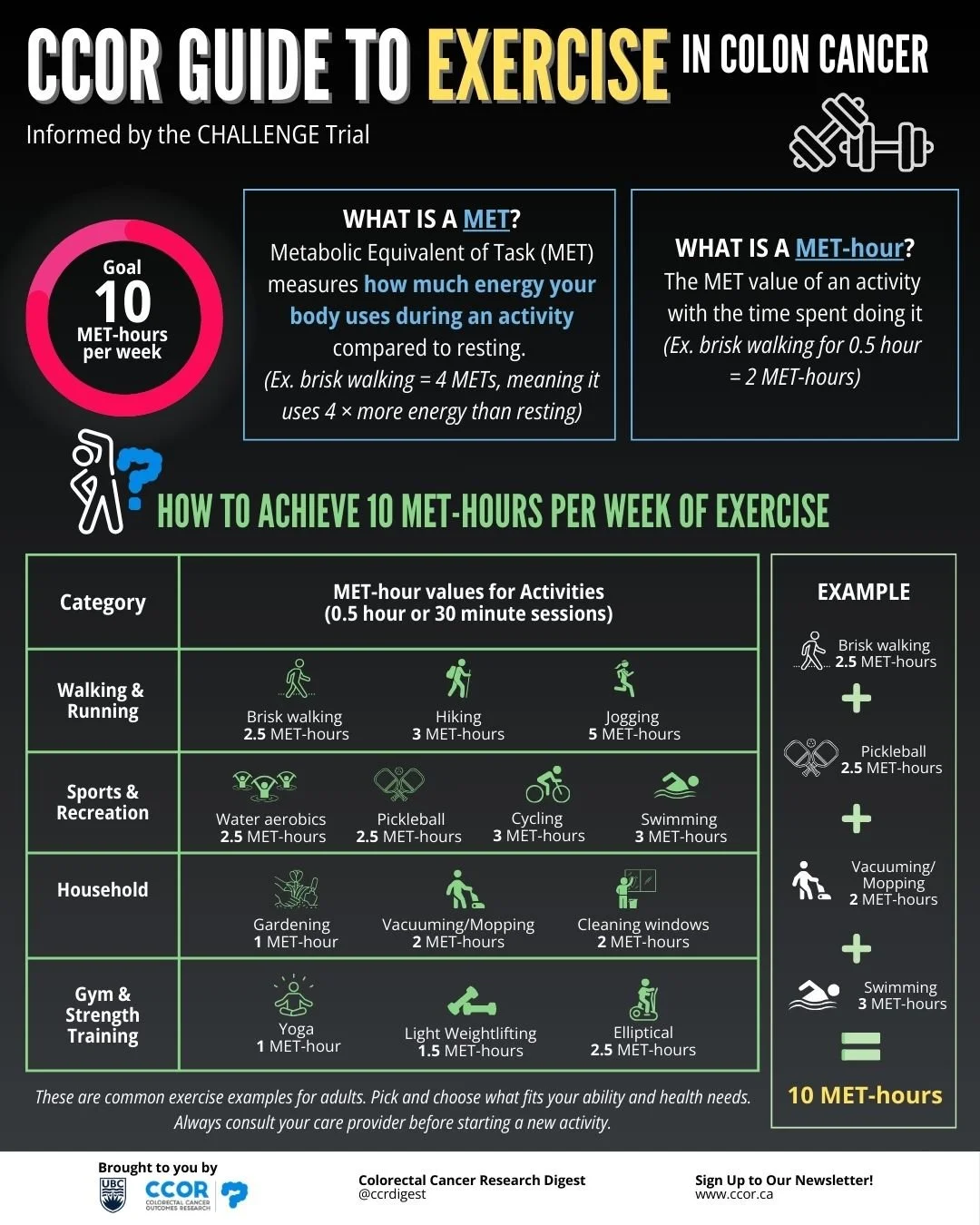
To figure out how different activities compare, researchers often turn to something called the Compendium of Physical Activities. It’s a standardized list that assigns MET values to hundreds of common movements — everything from walking and swimming to gardening and housework.
You told us in our Reader's Voice Survey that you want more tips and evidence-based advice for life after colorectal cancer. That’s why I am excited to launch CCOR Guides—practical, research-backed resources gathered just for you. The first is our CCOR Guide to Exercise in Colon Cancer, with simple, evidence-based ways to make movement part of survivorship. I am sharing this debut guide as a complimentary preview for subscribers.
I hope this edition of the Digest gave you both insight and encouragement. There’s a lot of information to take in, but my goal is always to make it meaningful for our community.

That's it for today!
👋 Before you go, we'd love to know what you thought of today's newsletter to help us improve the Digest experience for you.
Hit reply to let us know. Was it too hard to follow? Too long, didn't read it all? Leave you with more questions? Let us know! We read every response.
Talk soon,
Mary, Alexander, and Joy — The Colorectal Cancer Research Digest editorial team
