
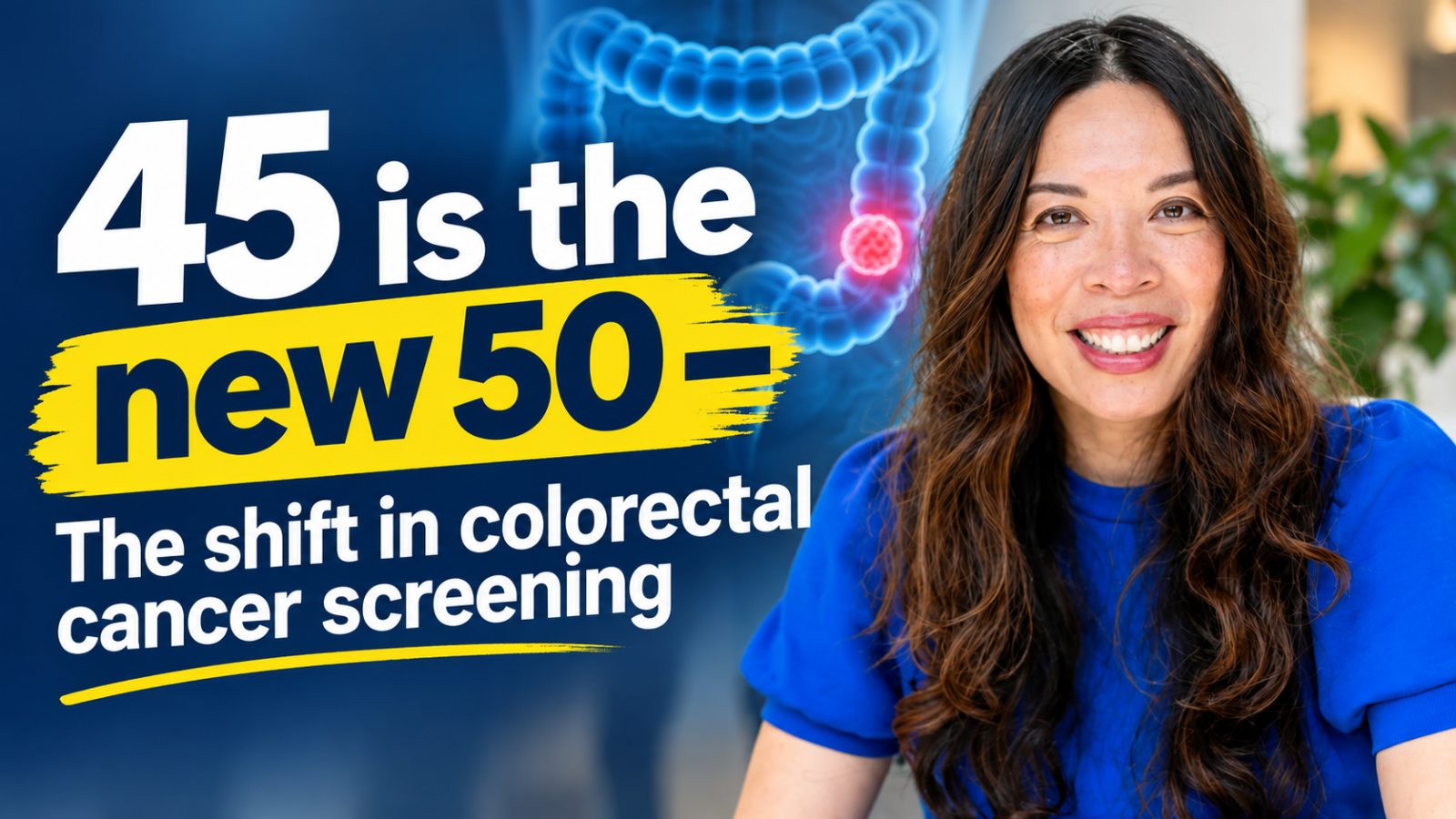
Vol 2 No. 9: 45 is the new 50 – The shift in colorectal cancer screening
Brought to you by

Dear Thriver,
This summer 2026 marked an important milestone for colorectal cancer prevention in Canada.
This year, Prince Edward Island and Ontario lowered the starting age for routine colorectal cancer screening from 50 to 45. Advocacy efforts are continuing to encourage earlier screening across the country.
For this September’s “back-to-school” edition of the Colorectal Cancer Research Digest, I wanted to step back and answer a simple question:
Why 45?
In this issue, I'll walk through the evidence behind this change and share some of the research I've been fortunate to be involved in that has helped shape the conversation around earlier screening.
With gratitude,




🍽️ The Digest: Canadian research behind 45 being the new 50
Year published: 2023
How the research was done:
Researchers used OncoSim, a uniquely Canadian tool developed through the Canadian Partnership Against Cancer. Think of it as a way to test "what if" scenarios before making changes in the real world. By using real-world data, research evidence, and expert knowledge, OncoSim can estimate the impact of different screening approaches. In this study, it was used to explore what might happen if colorectal cancer screening began at age 45 instead of age 50.
What did they find:
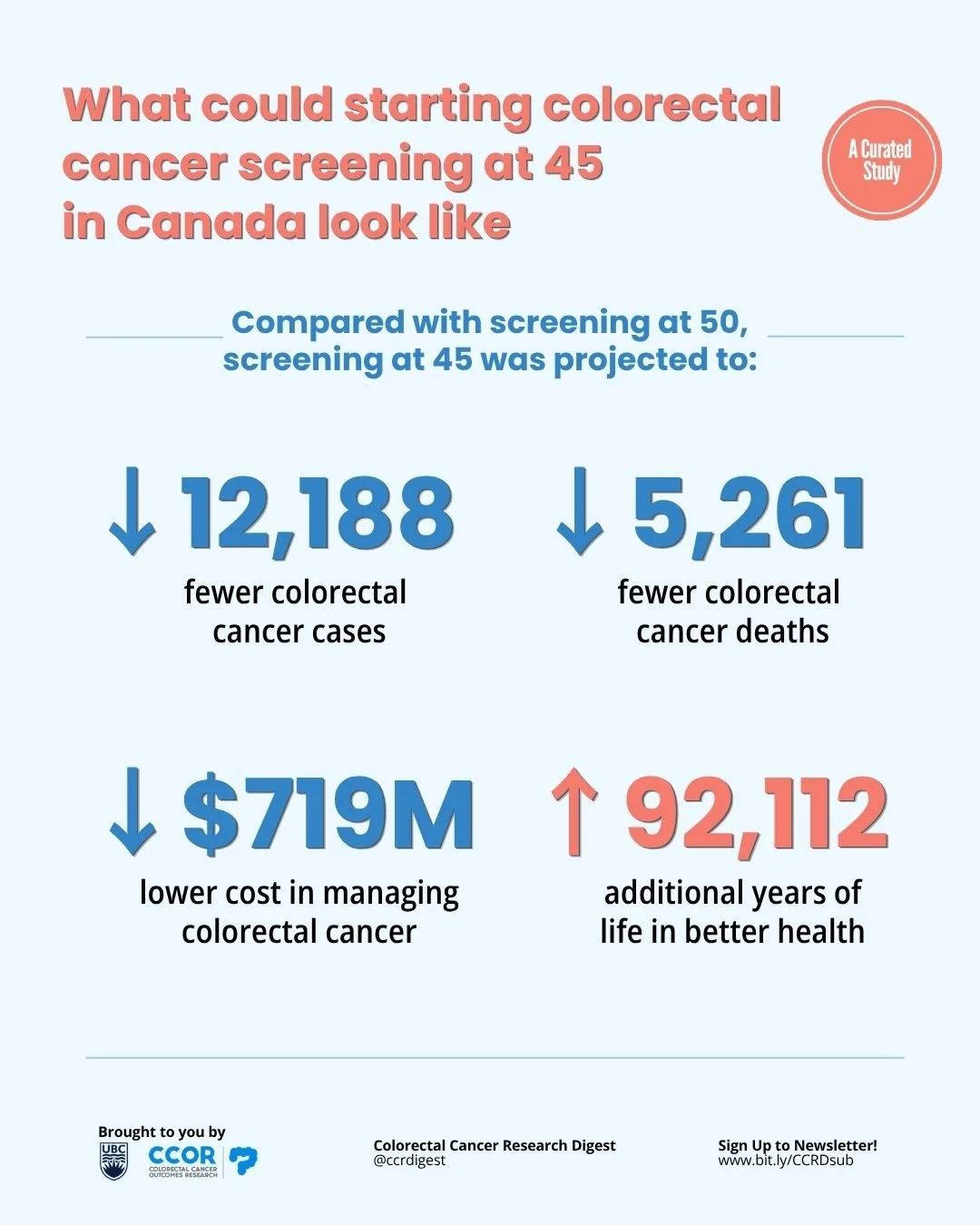
When researchers used OncoSim to compare screening starting at age 45 versus 50, they found that earlier screening could:
• Prevent more than 12,000 colorectal cancer cases
• Prevent more than 5,000 colorectal cancer deaths
• Require approximately $300 million more in screening and diagnostic costs
• But save approximately $700 million in colorectal cancer management costs

🔍 What does “routine screening” for CRC mean?
The move from 50 to 45 applies to routine screening, which is offered to people at average risk of colorectal cancer.
People are considered average risk if they:
• Have no personal history of colorectal cancer
• Have no personal history of colorectal polyps
• Do not have inflammatory bowel disease (Crohn's disease or ulcerative colitis)
• Do not have a strong family history of colorectal cancer

⚠️ Screening matters, but so does knowing the signs of colorectal cancer
The move to screening at 45 in Canadian provinces and ongoing advocacy is exciting progress. But regardless of when screening starts, it is important to know the signs and symptoms of colorectal cancer.
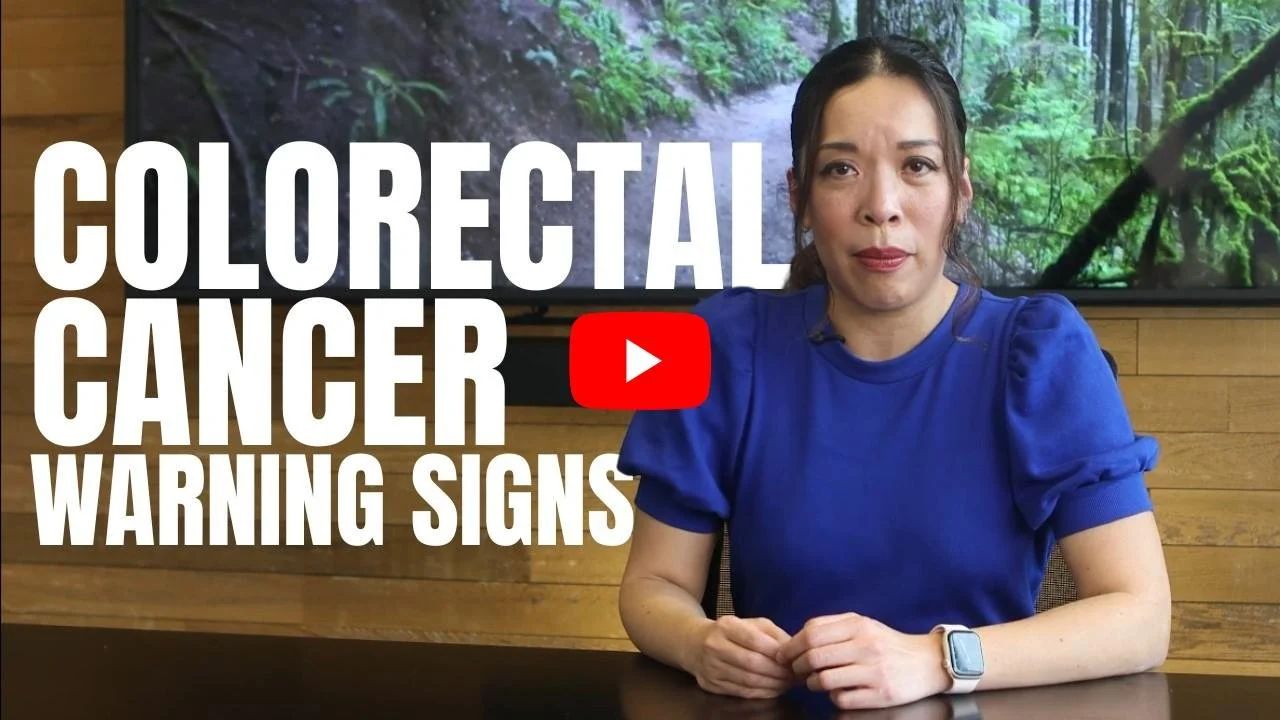
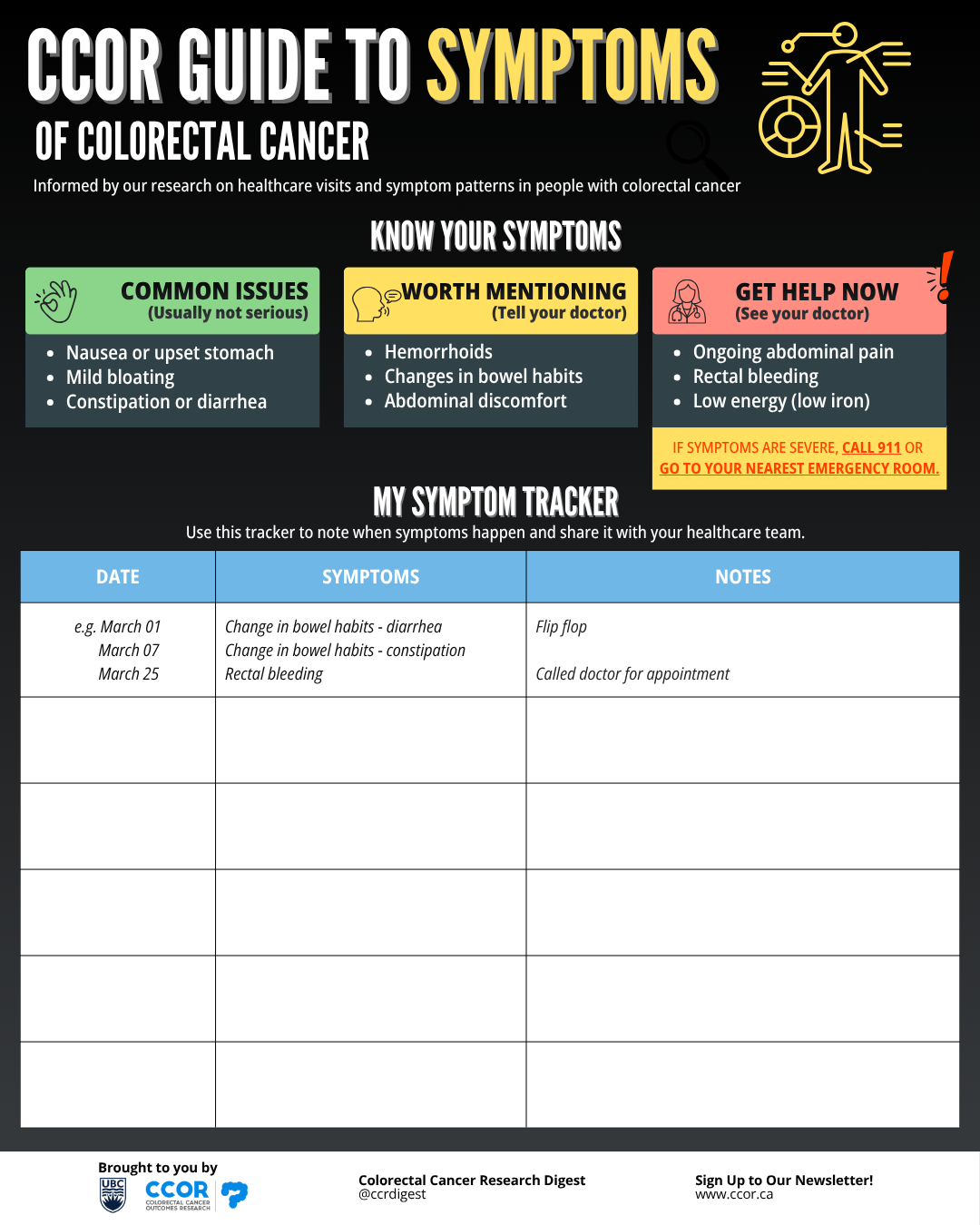
That's why I created two YouTube videos exploring the signs and symptoms of colorectal cancer, as well as the CCOR Guide to Symptoms of Colorectal Cancer. Together, they combine my personal experience and our team's research to help make symptom awareness clear, practical, and approachable.
Awareness saves lives. Whether you're reviewing the information for yourself or sharing it with someone you care about, I hope these resources help make conversations about colorectal cancer a little easier to start.


What thrivers ❤️ about the Digest
"THANK YOU so much for this letter! It came to me at the perfect moment and I read every word and followed every link. But I also really appreciated the summaries both in words and pictures..."
"...Thanks for this information as I have followed you for the past six years and still hope to."
Missed a past issue? No stress.
Every Digest we’ve published lives in one place, so you can catch up anytime — whether you joined yesterday or have been with us from day one.

That's it for today!
👋 Before you go, we'd love to know what you thought of today's newsletter to help us improve the Digest experience for you.
Hit reply to let us know. Was it too hard to follow? Too long, didn't read it all? Leave you with more questions? Let us know! We read every response.
Talk soon,
Mary, Alexander, and Joy — The Colorectal Cancer Research Digest editorial team
