
Vol 2. No. 5 Let’s talk about mental health
Brought to you by


Dear Thriver,
May is Mental Health Awareness Month—and for me, it’s another opportunity to talk about something we don’t always talk about.
Mental health is hard to talk about.
Colorectal cancer is hard to talk about.
And when the two intersect, that silence can be even stronger.
In this issue of The Digest, I focus on mental health across the colorectal cancer journey—from diagnosis, to treatment, to life beyond cancer. I highlight findings from my research study, with the goal of putting words to these experiences—because when we can name what we’re feeling, it becomes easier to talk about it.
If you think this Digest could help someone you care about, I hope you’ll consider sharing it. Sometimes, starting the conversation can make all the difference.
With gratitude,




Mental health in CRC: A video on lived experience and putting words to what we feel
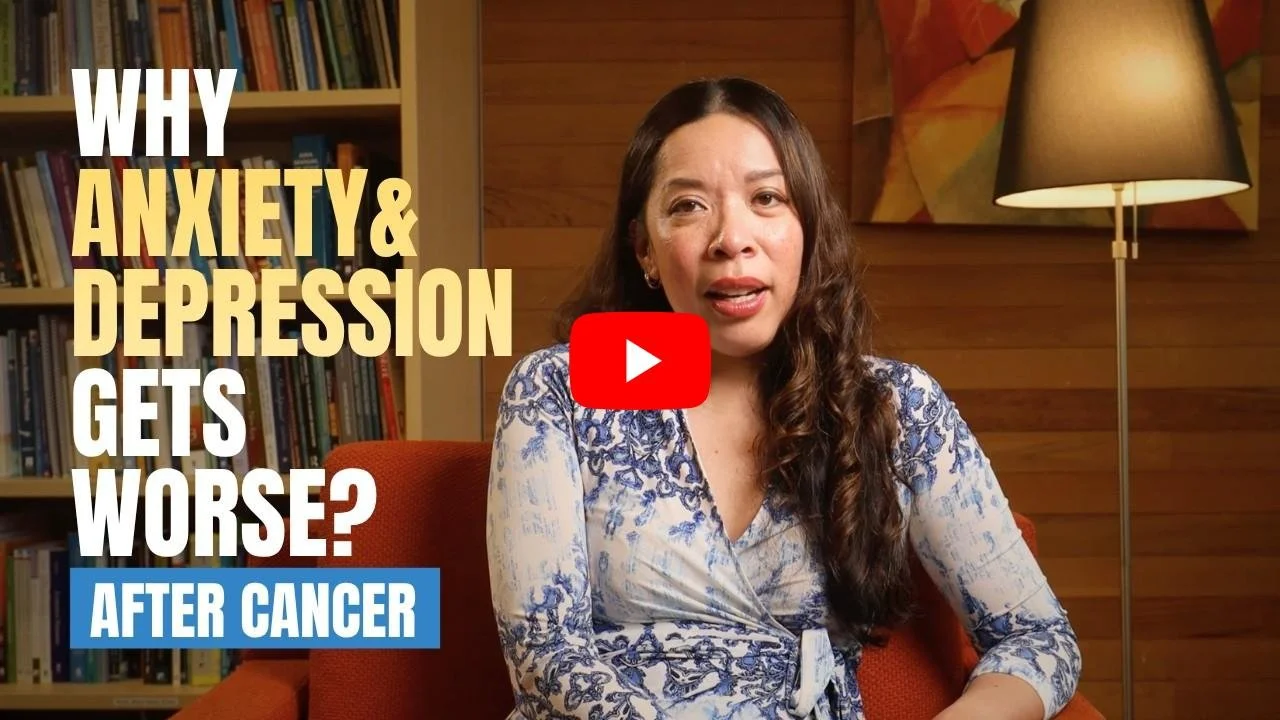
Mental health in colorectal cancer is something many people experience—but often don’t have the words for. In this video, I share my own experiences alongside research that explores how mental health shows up across the cancer journey—helping put language to what we feel so it becomes easier to talk about.

The Digest: How mental health shows up across the colorectal cancer journey
Year published: September 2024
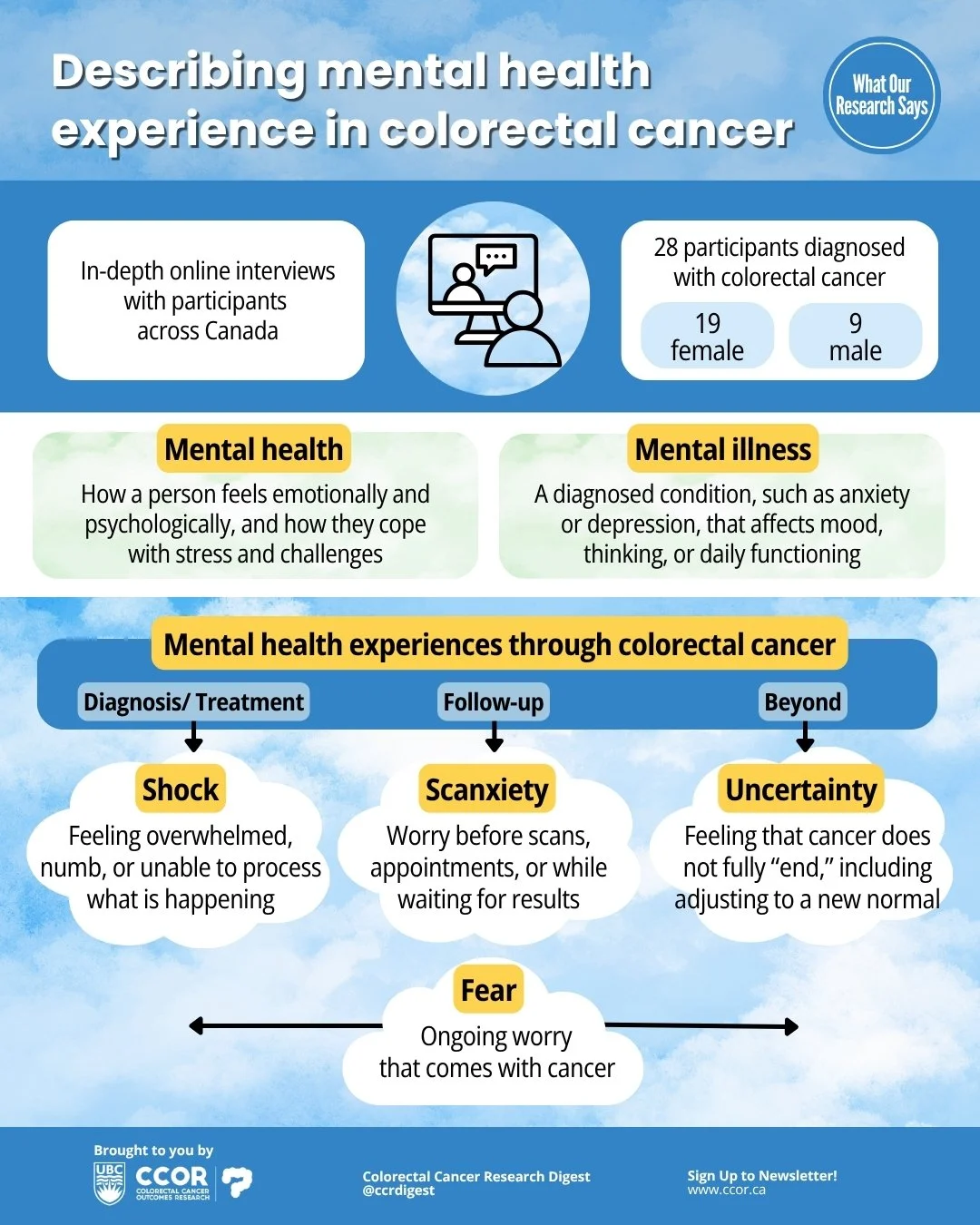
How we did this research: We conducted in depth interviews with people diagnosed with colorectal cancer across Canada, including those in treatment, followup, and life beyond cancer.
What we found: From this research, one of the most important things we learned is that mental health experiences in colorectal cancer are often felt—but not always named.
Want to see words describe these experiences and how they show up across the colorectal cancer journey? Explore the study infographic here.

CCOR Guide to Anxiety and Depression

Mental health in CRC is important—and that’s why we created this guide: to help make it easier to recognize and respond to mental health changes.
It focuses on anxiety and depression, two common, treatable mental illnesses that can affect wellbeing and recovery.
It also provides practical ways to take action—from building support to seeking care—that can support mental health more broadly, even without a formal diagnosis.
At its core, the message is simple:
you’re not alone, and help is available.
If you think this guide could support someone you care about, please consider sharing it.

What thrivers ❤️ about the Digest
"THANK YOU so much for this letter! It came to me at the perfect moment and I read every word and followed every link. But I also really appreciated the summaries both in words and pictures..."
"...Thanks for this information as I have followed you for the past six years and still hope to."
Missed a past issue? No stress.
Every Digest we’ve published lives in one place, so you can catch up anytime — whether you joined yesterday or have been with us from day one.

That's it for today!
👋 Before you go, we'd love to know what you thought of today's newsletter to help us improve the Digest experience for you.
Hit reply to let us know. Was it too hard to follow? Too long, didn't read it all? Leave you with more questions? Let us know! We read every response.
Talk soon,
Mary, Alexander, and Joy — The Colorectal Cancer Research Digest editorial team
