
Vol 2 No. 2: In a month about love, we shine a light on partners of cancer patients
This issue may be especially relevant if you are a partner to a cancer patient.
Brought to you by

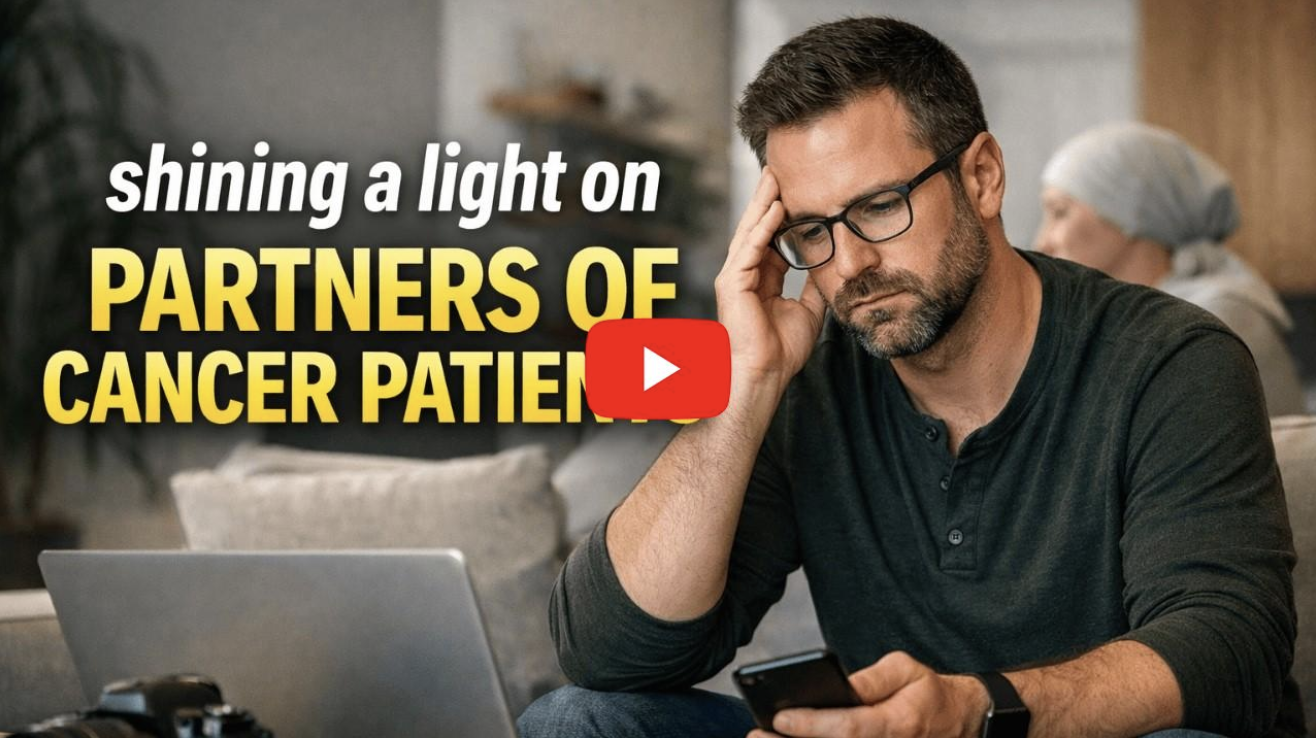
We often ask cancer patients how they're doing, but rarely do we consider their partners. Watch our latest video that draws from 159 studies to highlight what partners actually experience, struggle with, and need during the cancer journey, emphasizing the importance of caregiver support. The research, presented as a research paper, aims to develop resources for family caregivers who often face caregiver burnout. By analyzing qualitative data, we hope to better understand and address their needs.
Dear Thriver,
Before we close February — a month so often associated with love — I want to shine a light on a group that is often overlooked in the cancer experience: partners.
This month, I’m sharing my first published cancer research study of 2026, focused on understanding the experiences of partners of people with cancer.
Years ago, when a close friend was diagnosed, their partner quietly said to me, “They always ask about them, but no one asks about me.” I never forgot it. And when I later went through my own cancer diagnosis, I noticed the same pattern — many asked how I was doing, but very few asked about my partner.
If you have a partner who has walked beside you through cancer, could you ask them something for me?
Please ask them: “How are you doing, really?”
With gratitude,




🍽️ The Digest: Through their eyes — The cancer experience for partners
Year published: 2026
How we did the research:
We searched the scientific literature to find studies that explored the experiences of partners of people with cancer — through interviews, focus groups, and other ways of capturing personal stories. We included studies with adult partners, published in English, and did not limit by cancer type. Then we brought the findings together to identify common themes in what partners live through, feel, and need.
What we found:
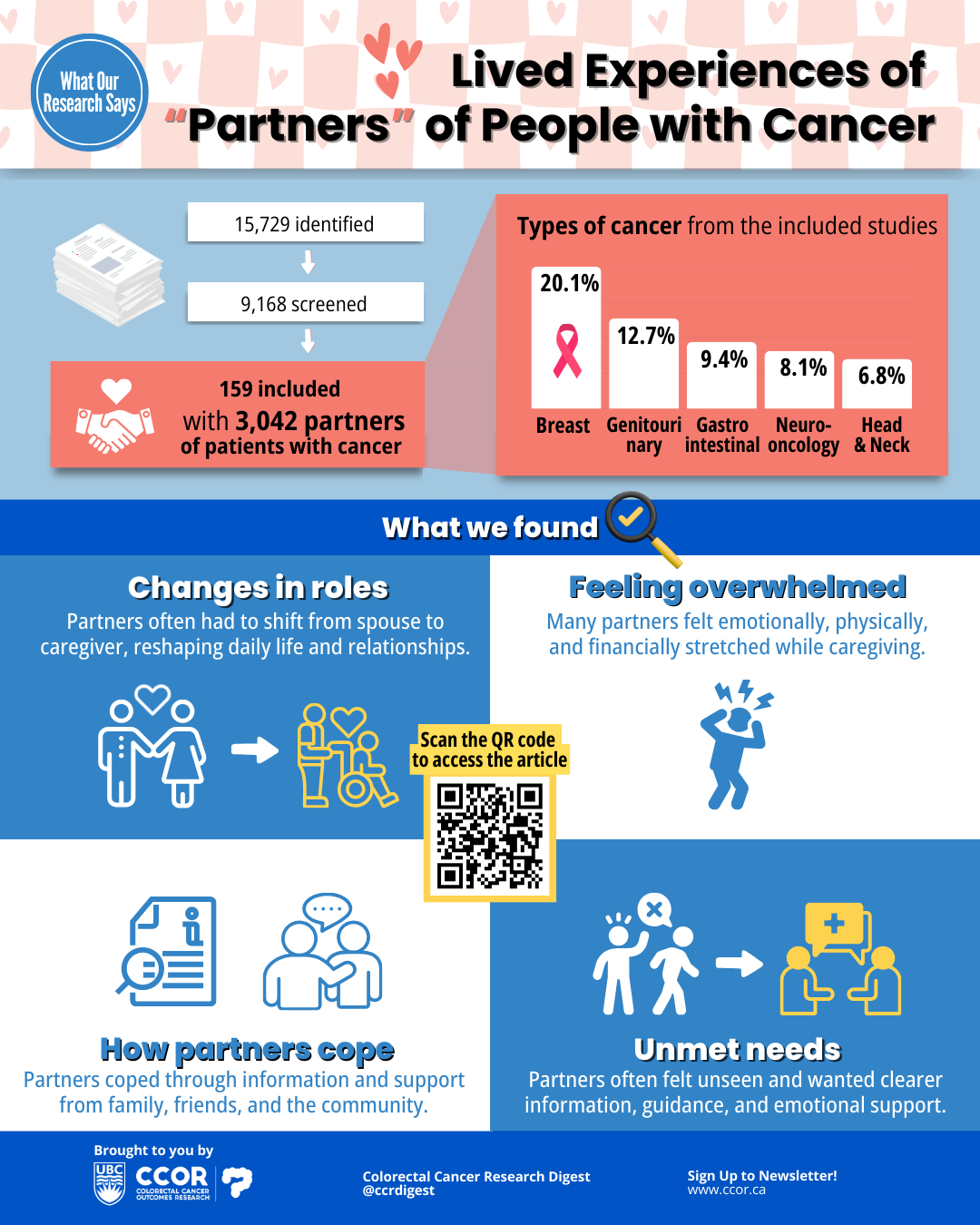
We screened nearly 16,000 studies to include 159 that included the voices of 3,042 partners of patients with cancer.
The studies represented partners across a wide range of cancers — most commonly breast cancer, genitourinary cancers (including prostate cancer), gastrointestinal cancers (including CRC), brain cancers, lung cancer, head and neck cancers, gynecological cancers (including uterine cancer), and blood cancers.
When we combined findings from all 159 studies, wefoundfour major themes.
1. Changes in roles and relationships: Partners often found their roles shifting suddenly — from being a spouse or companion to becoming a caregiver. This changed daily routines, emotional connection, and even intimacy, as couples tried to adjust to a new “normal” together.
2. Feeling overwhelmed: Many partners felt stretched thin — emotionally, physically, and financially. Caring for someone with cancer often meant less sleep, more worry, and carrying a lot of responsibility, sometimes without much support.
3. How partners cope: Partners used many different ways to get through tough moments: gathering information, leaning on faith or routines, talking to friends, or finding small pockets of strength and meaning. Support from others — and clear communication from healthcare providers — made a big difference.
4. What partners need but often don’t get - Across studies, partners shared that they often felt unseen. They wanted clearer information, practical guidance, emotional support, and space to ask questions — but these needs were often overlooked in a system focused mostly on the patient.
Why this research matters:
Partners are often neglected in the cancer story. Through this research, we wanted to spotlight their experiences and make sure their needs are seen and heard.
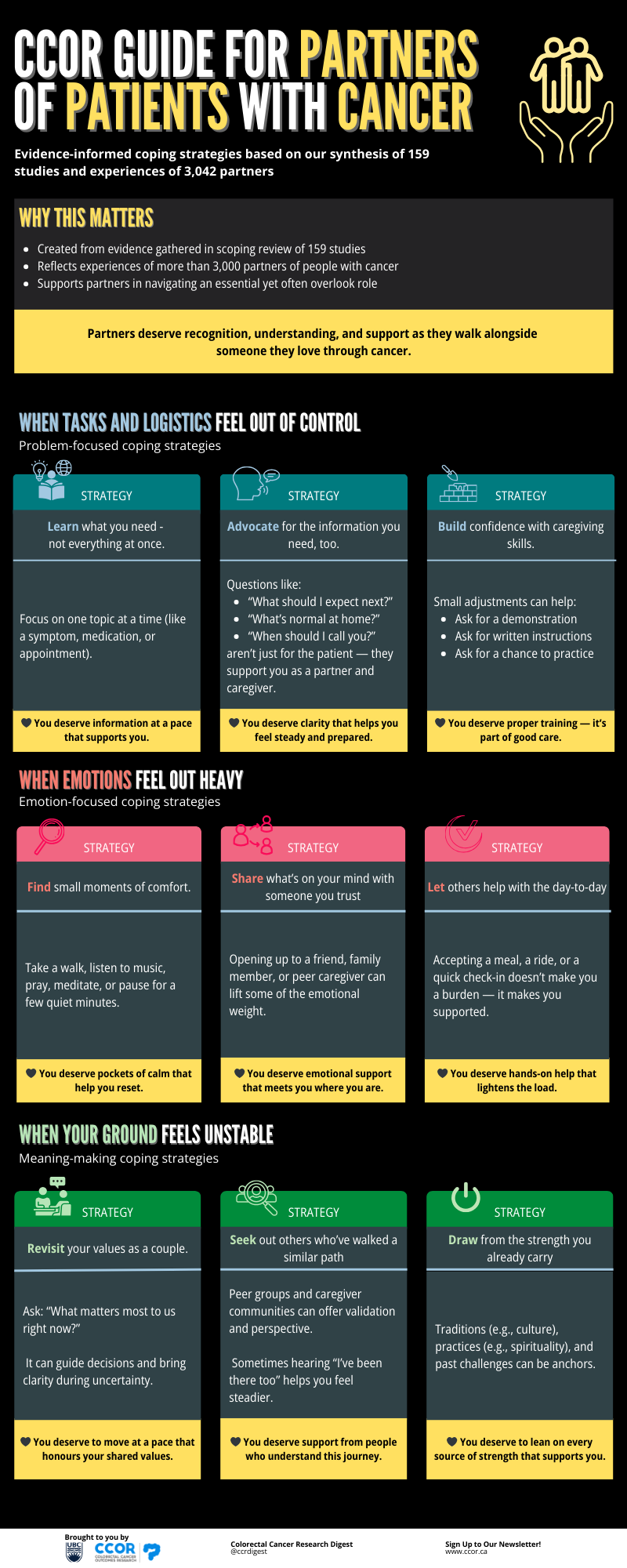
🗺️ From 159 Studies to CCOR Guide for Partners of Patients with Cancer
We didn’t want to stop at synthesizing research — we wanted to make it useful. Since coping was a major theme, we created the CCOR Guide for Partners of Patients with Cancer to offer clear, evidence-informed support. We hope this guide is helpful, and we encourage you to share it with partners in your community who may benefit from it.

👁️ Looking ahead to March 2026 Colorectal Cancer Awareness Month
As March approaches, our CCOR team is gearing up with a range of initiatives to help spread the word about colorectal cancer—because awareness saves lives.
We’ll be sharing important messages, resources, and stories across all our platforms. Whether you’re on LinkedIn, YouTube, Facebook, Instagram, or TikTok, you’ll find us there.
Please follow, engage, and share our content to help amplify this important cause. Together, we can make a meaningful impact.

What thrivers ❤️ about the Digest
"THANK YOU so much for this letter! It came to me at the perfect moment and I read every word and followed every link. But I also really appreciated the summaries both in words and pictures..."
"...Thanks for this information as I have followed you for the past six years and still hope to."
Missed a past issue? No stress.
Every Digest we’ve published lives in one place, so you can catch up anytime — whether you joined yesterday or have been with us from day one.

That's it for today!
👋 Before you go, we'd love to know what you thought of today's newsletter to help us improve the Digest experience for you.
Hit reply to let us know. Was it too hard to follow? Too long, didn't read it all? Leave you with more questions? Let us know! We read every response.
Talk soon,
Mary, Alexander, and Joy — The Colorectal Cancer Research Digest editorial team
